
A brighter smile can boost your confidence in conversations, photos, and everyday interactions. However, choosing between professional teeth whitening and store-bought strips can be confusing. Both methods can reduce discoloration, but they differ in effectiveness, safety, and treatment timelines.
At Ironwood Dental Care, Dr. Stanley helps patients understand their cosmetic treatment options and make informed decisions. For residents of Gilbert, Queen Creek, and surrounding Arizona communities, understanding these differences is the first step toward achieving a brighter smile.
Why Do Teeth Become Yellow or Discolored?
Tooth discoloration develops for several reasons. Some stains accumulate on the enamel, while others originate within the tooth structure.
Common causes include:
- Coffee and tea: Dark pigments can gradually stain tooth enamel.
- Tobacco use: Nicotine and tobacco-related compounds contribute to persistent discoloration.
- Aging: Enamel becomes thinner over time, making the yellowish dentin underneath more visible.
- Certain medications: Some antibiotics taken during tooth development can cause internal staining.
- Poor oral hygiene: Plaque buildup can make teeth appear darker or duller.
Understanding the cause matters because not all types of discoloration respond equally to bleaching products.
What Is Professional Teeth Whitening?
Professional teeth whitening is a cosmetic dental procedure that uses peroxide-based bleaching agents to lighten natural tooth enamel.
Unlike over-the-counter products, dentist-supervised treatments begin with an oral examination. This helps identify cavities, gum inflammation, existing restorations, and other conditions that may affect treatment.
Two common options include:
In-Office Whitening
A dental professional applies bleaching gel while protecting the surrounding gum tissue.
The procedure typically takes about an hour, and you may notice improvements after one appointment.
Dentist-Supervised At-Home Whitening
Patients receive custom-fitted trays and bleaching gel to use at home.
Treatment usually continues over several days or weeks, depending on the recommended schedule.
Both approaches provide professional oversight while accommodating different preferences.
How Do Over-the-Counter Whitening Strips Work?
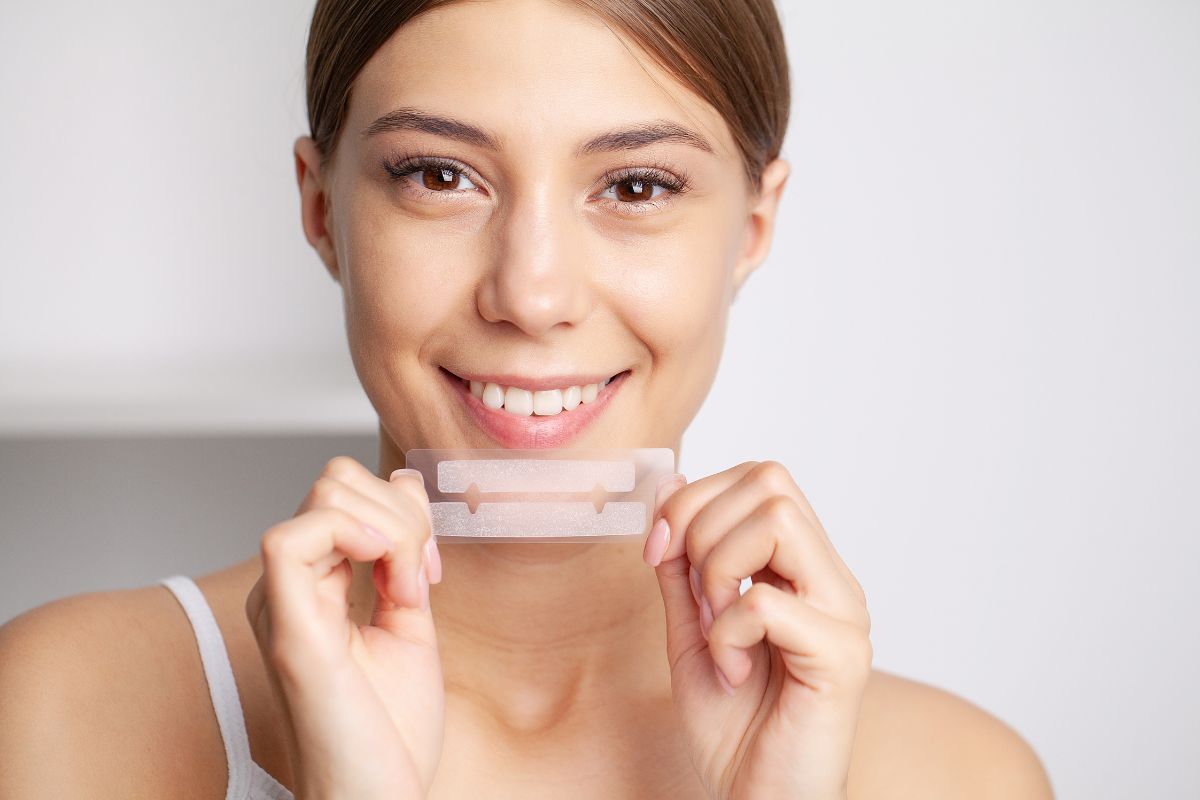
Whitening strips are thin, flexible plastic strips coated with peroxide-based bleaching gel.
They adhere directly to the teeth and gradually break down discoloration through repeated applications.
Their main advantages include:
- Convenient application at home.
- Lower initial purchase price.
- No dental appointment required for purchasing.
- Gradual improvements in mild discoloration.
However, strips may not contact every tooth surface evenly. Improper placement can also expose gums to bleaching agents.
For people with crowded teeth, restorations, or persistent stains, results may be less predictable.
Professional Whitening vs. Whitening Strips: Key Differences
Understanding the practical differences can help Gilbert residents select an appropriate approach.
| Comparison | Professional Whitening | Whitening Strips |
| Treatment time | One office visit or a supervised home program | Usually daily applications for several days or weeks |
| Results | Often faster with in-office treatment | Typically gradual |
| Application | Dentist-controlled or custom-fitted trays | Standard adhesive strips |
| Sensitivity | Monitored through professional guidance | May occur without professional supervision |
| Initial cost | Generally higher | Generally lower |
| Suitability | Evaluated according to oral health | Less individualized |
The main difference is professional evaluation and control over treatment, not simply bleaching strength.
Both methods can produce noticeable changes, although individual outcomes vary.
Which Whitening Option Is Suitable for Your Smile?
Your oral health, staining pattern, and expectations should influence your decision.
Consider Professional Treatment If:
- You want noticeable results before an upcoming event.
- You have persistent yellow or brown discoloration.
- You prefer supervised treatment.
- Your teeth are unevenly positioned.
- You’re concerned about sensitivity or gum irritation.
A cosmetic dentist in Gilbert can assess these factors before recommending a treatment approach.
Consider Whitening Strips If:
- Your discoloration is relatively mild.
- You prefer gradual improvements.
- Your teeth and gums are healthy.
- You can consistently follow product instructions.
If you are unsure, visit our dental office for an evaluation before starting any bleaching treatment.
Can Whitening Treatments Cause Tooth Sensitivity?
Yes. Both professional products and whitening strips can cause temporary tooth sensitivity or gum irritation.
Peroxide can penetrate enamel and temporarily irritate the tooth’s internal tissues.
Our cosmetic dentist can review your sensitivity history and recommend adjustments when appropriate.
Patients with untreated cavities, exposed roots, or gum disease should address those concerns before bleaching.
Additionally, crowns, veneers, and tooth-colored fillings don’t respond to bleaching agents the way natural teeth do.
How Can You Maintain a Brighter Smile?
No matter which method you choose, daily habits affect how long results stay visible.
Consider these preventive measures:
- Brush twice daily using fluoride toothpaste.
- Floss regularly to remove plaque.
- Rinse with water after drinking coffee or tea.
- Avoid tobacco products.
- Schedule routine dental cleanings.
- Discuss touch-up treatments with your cosmetic dentist.
These habits help limit new surface stains while supporting long-term oral health.
Make Your Next Smile Decision With Confidence
Choosing between whitening strips and professional treatment depends on your dental health, discoloration, and desired results.
If you are considering teeth whitening in Gilbert, our team can help you explore in-office treatment or dentist-supervised home trays.
Ready for a brighter smile? Contact us to book an appointment at our Gilbert dental office, located at 3875 E. Williams Field Road, Suite 102. Take the next step toward a smile you feel confident sharing.
Frequently Asked Questions
1. Are Professional Whitening Treatments More Effective Than Strips?
In-office treatments often produce noticeable changes faster because dentists control the bleaching process. Strips can also lighten natural teeth, particularly when discoloration is mild. A dental examination can help determine which approach may produce more predictable results.
2. How Long Do Professional Whitening Results Last?
Results may last several months or longer, depending on diet, oral hygiene, and tobacco use. Coffee, tea, and other staining substances can gradually darken teeth again. Our cosmetic dentist can recommend an appropriate maintenance schedule.
3. Can Whitening Strips Damage Tooth Enamel?
When used as directed, these products are generally safe for suitable patients. However, excessive or improper use may contribute to sensitivity and oral irritation. A dental consultation can help identify the right products and treatment schedule for your teeth.
4. Is Professional Whitening Suitable for Sensitive Teeth?
Some patients with sensitive teeth can undergo bleaching after an evaluation. The dentist may recommend a different peroxide concentration, shorter application periods, or sensitivity-management measures. Existing dental problems should be addressed before cosmetic treatment begins.
5. Will Whitening Work on Crowns, Veneers, or Fillings?
Bleaching agents lighten natural tooth structure but do not change the color of crowns, veneers, or fillings. This can create noticeable shade differences. Our cosmetic dentist can assess existing restorations and discuss ways to maintain a balanced smile appearance.
6. Should I Get a Dental Cleaning Before Whitening?
A professional cleaning can remove plaque and certain surface stains that affect your smile’s appearance. It also allows the dental team to assess your oral health before bleaching. Our dentist can determine whether you should clean first or start with another treatment.
