
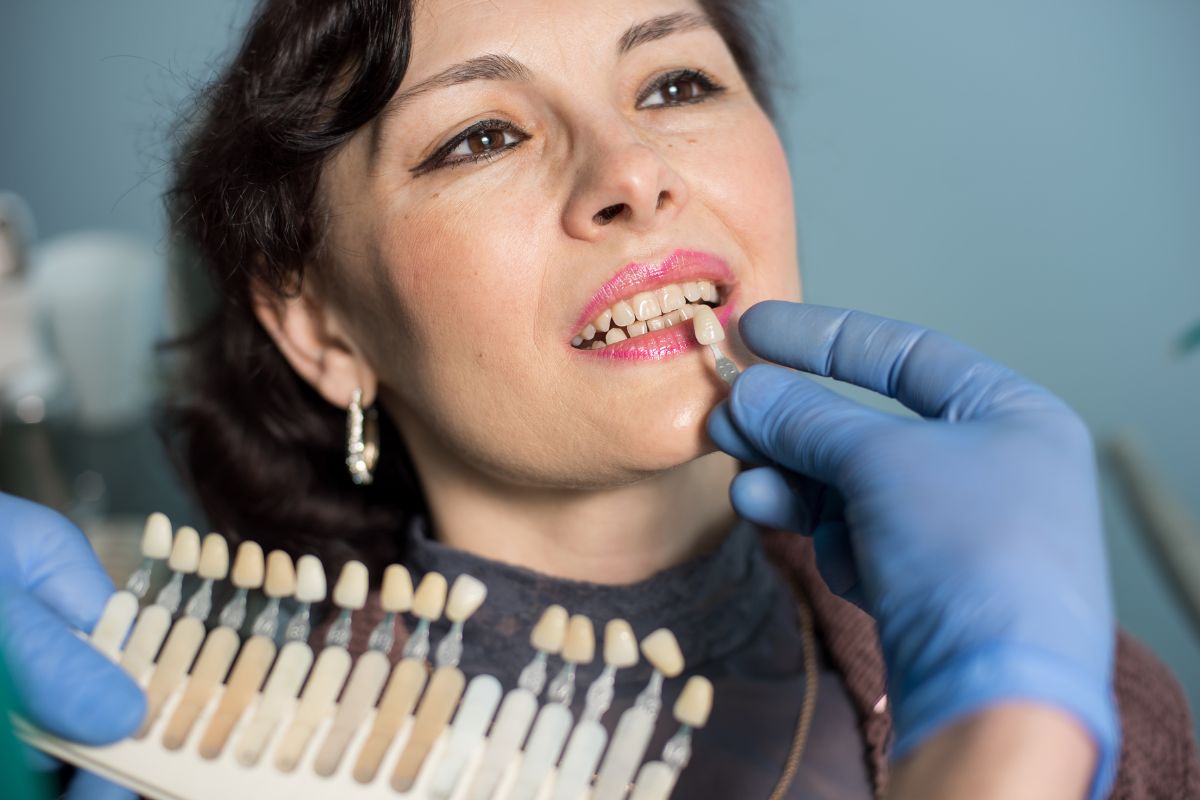
If your teeth still look yellow, brown, gray, or uneven after professional whitening, the problem may not be the whitening treatment itself. Some types of tooth discoloration do not respond well to conventional external whitening because the stain is inside the tooth, caused by a developmental condition, or associated with dental restorations.
Professional teeth whitening can be highly effective for many extrinsic and intrinsic stains, but it cannot change the color of crowns, veneers, fillings, or other dental restorations. Some deeper discoloration may also require a different cosmetic or restorative approach.
Here are seven types of discoloration that may not respond as expected to conventional teeth whitening.
1. Tetracycline Stains
Tetracycline is an antibiotic that can cause intrinsic tooth discoloration when exposure occurs while teeth are developing. The resulting color may range from yellow or brown to gray, and the discoloration can affect the internal structure of the tooth.
Because the stain develops within the tooth rather than simply sitting on the enamel surface, it can be much more difficult to treat than coffee or tea stains.
Whitening may reduce some tetracycline discoloration, but treatment can require a longer and more carefully monitored approach. The American Dental Association notes that tetracycline staining can sometimes be diminished through bleaching, but treatment may require several months.
For more pronounced discoloration, a dentist may discuss alternatives such as veneers or other cosmetic treatment.
Key point: Tetracycline staining is an intrinsic discoloration, so ordinary surface-stain removal may not produce the result you expect.
2. Fluorosis Stains
Dental fluorosis develops while teeth are forming after excessive fluoride exposure during tooth development. It can appear as white lines, spots, patches, or, in more pronounced cases, brown discoloration and pitting of the enamel.
This type of discoloration can be challenging because the tooth may have areas with different colors and textures.
Interestingly, not all fluorosis responds in the same way to whitening. The ADA notes that brown fluorosis discoloration may respond better to bleaching than white fluorosis marks.
If the concern is primarily white spots or uneven enamel coloration, whitening the surrounding tooth can sometimes make the contrast more noticeable rather than completely eliminating the appearance.
Depending on the severity, treatment may involve professional stain management, enamel microabrasion, cosmetic bonding, or veneers rather than whitening alone.
3. Gray or Dark Discoloration From Tooth Trauma
A tooth that has been injured can gradually become darker than the teeth around it.
This type of discoloration is different from ordinary surface staining. Trauma can affect the internal tissues of a tooth and may lead to intrinsic discoloration.
You may notice:
- One tooth becoming noticeably darker
- Gray, brown, or yellow discoloration
- A significant color difference between one tooth and neighboring teeth
- Discoloration that does not improve with normal whitening
When a single tooth changes color, determining the cause is important before choosing a cosmetic treatment. The ADA notes that single-tooth discoloration can have multiple causes, including trauma, dental conditions, dental materials, and changes within the tooth.
In some situations, treatment may involve addressing the health of the tooth first and considering internal bleaching or another restorative option rather than simply applying external whitening.
4. Discoloration From a Damaged or Non-Vital Tooth
A tooth that has experienced significant internal damage can develop a darker appearance.
Unlike coffee or tobacco stains that accumulate on the outside of the tooth, discoloration associated with changes inside the tooth may not respond adequately to conventional external whitening.
This is particularly important when one tooth is much darker than the others.
A dental examination can help determine whether the discoloration is related to the pulp or another internal dental problem. The appropriate treatment depends on the condition of the tooth rather than simply its color.
For certain non-vital teeth, internal bleaching may be considered after the underlying dental condition has been appropriately evaluated and treated.
If one tooth suddenly becomes dark or gray, don’t keep whitening it repeatedly without finding out why.
5. Dark Internal Discoloration From Dental Materials
Some dental materials can contribute to a darker appearance.
For example, older metallic restorations may influence the color of the surrounding tooth structure. The ADA identifies amalgam restorations among potential causes of intrinsic tooth discoloration.
External whitening does not simply erase discoloration associated with the internal structure of a restored tooth.
If a restoration is contributing to an uneven smile, the solution may involve evaluating the restoration itself rather than increasing the strength or frequency of whitening treatments.
This is one reason a dental examination is useful before attempting repeated whitening.
6. White Spots and Uneven Enamel
Not every whitening concern is caused by a dark stain.
Some people have naturally occurring white spots or areas of uneven enamel caused by factors such as fluorosis or previous orthodontic treatment.
Whitening can make the overall tooth lighter without actually removing the white area.
As the surrounding enamel becomes brighter, the contrast between the white spot and the rest of the tooth may remain visible.
Depending on the cause and appearance, treatment may involve options such as:
- Enamel microabrasion
- Resin infiltration
- Cosmetic bonding
- Veneers
- A combination of treatments
The appropriate option depends on the depth, size, cause, and appearance of the enamel changes.
7. Crowns, Veneers, and Tooth-Colored Fillings
This is one of the most common reasons people notice uneven whitening.
Dental restorations do not whiten in the same way as natural teeth.
If you have a crown, veneer, or tooth-colored filling on a visible tooth, professional teeth whitening may lighten your natural teeth while the restoration remains at its original shade. The result can be a noticeable color mismatch.
For example, imagine that you have a porcelain crown on one front tooth and natural teeth surrounding it. Whitening may brighten the natural teeth, but the crown will not change to match the new shade.
In that situation, simply repeating whitening treatments will not change the color of the crown.
Instead, the restoration may need to be evaluated and potentially replaced or cosmetically modified to coordinate with the desired tooth shade.
Ironwood Dental Care also offers veneers for patients with stained or discolored teeth, including cases where whitening alone may not provide the desired cosmetic result.
Why Does Professional Whitening Work Better on Some Stains?
The key difference is where the discoloration is located.
Extrinsic stains
Extrinsic stains develop primarily on the outside of the enamel. Common causes include:
- Coffee
- Tea
- Red wine
- Tobacco
- Dark-colored foods and beverages
- Certain environmental exposures
These stains can often respond well to professional cleaning and whitening.
Intrinsic discoloration
Intrinsic discoloration occurs within the enamel or dentin.
Possible causes include:
- Aging
- Fluorosis
- Tetracycline exposure during tooth development
- Trauma
- Certain dental conditions
- Internal changes within a tooth
- Some dental materials
These cases may require a more individualized approach.
This distinction is important because whitening is not a universal treatment for every type of tooth discoloration.
What Should You Do If Your Teeth Won’t Whiten?
If you’ve completed professional whitening and still aren’t seeing the result you expected, don’t automatically assume that you need a stronger whitening treatment.
Start by identifying what is causing the discoloration.
A dental evaluation can help determine whether you’re dealing with:
- Surface staining
- Intrinsic discoloration
- Enamel irregularities
- A darkened individual tooth
- A crown, veneer, or filling
- A combination of different causes
The ADA recommends evaluating the teeth and existing restorations before whitening because the cause of discoloration can influence treatment results.
This evaluation is particularly important if you have one tooth that is significantly darker than the others, extremely dark stains, crowns or fillings in your smile zone, or discoloration that appeared after an injury.
Can Veneers Help When Whitening Doesn’t?
Sometimes.
Veneers can cover the visible front surface of a tooth and may be considered when discoloration cannot be adequately corrected with whitening alone.
Ironwood Dental Care offers both porcelain and composite veneers for cosmetic concerns including stained or discolored teeth.
However, veneers are not simply a stronger version of teeth whitening. They are a different cosmetic treatment with different considerations.
The right option depends on the condition of the tooth, the cause of discoloration, your existing restorations, and your overall smile goals.
Why Repeated Whitening May Not Solve the Problem
If the underlying discoloration is not responsive to external bleaching, repeatedly whitening your teeth may not address the actual issue.
Whitening treatments can also cause temporary sensitivity and gum irritation, which are among the more common adverse effects associated with vital tooth whitening.
Instead of continuing to increase whitening frequency, it makes sense to determine why the tooth is not responding.
The goal should not simply be a lighter shade. It should be an even, natural-looking result that accounts for your natural teeth and any existing dental work.
Teeth Whitening in Gilbert: When to Consider a Dental Evaluation
If you’re considering teeth whitening in Gilbert, a consultation can help determine whether whitening is likely to address the type of discoloration you’re experiencing.
At Ironwood Dental Care, professional whitening is available in both in-office and at-home formats. Existing dental restorations, as well as the type and extent of staining, can affect treatment options and results.
A personalized evaluation can help determine whether your discoloration is primarily surface staining, intrinsic discoloration, enamel variation, or related to an existing restoration. If whitening is appropriate, the treatment can then be selected based on your teeth and cosmetic goals.
If you’re ready to explore your options, visit our dental practice in Gilbert to discuss your concerns and learn which approach may be appropriate for your smile.
Frequently Asked Questions
- Why won’t my teeth whiten even with professional treatment?
Professional whitening may have limited results when discoloration is caused by intrinsic stains, fluorosis, tetracycline exposure, trauma, certain dental materials, or restorations such as crowns and veneers. Identifying the cause is the first step toward choosing the appropriate treatment.
- Can professional whitening remove deep stains?
Professional whitening can improve some intrinsic discoloration, but the response depends on the type and severity of the stain. Some deep discoloration may require a different treatment approach.
- Can whitening remove stains from crowns?
No. Whitening changes the color of natural teeth but does not whiten crowns or other tooth-colored restorations.
- Why is one tooth darker than the others?
A single dark tooth can have several possible causes, including trauma, internal tooth changes, dental materials, or other dental conditions. A dental examination can help identify the underlying cause.
- Do veneers whiten?
No. Veneers do not respond to conventional teeth whitening in the same way natural tooth structure does. If you already have veneers, whitening your natural teeth may create a shade difference.
- Are yellow teeth easier to whiten than gray teeth?
Generally, yellow discoloration may respond more predictably to whitening than some gray discoloration. The cause and location of the discoloration still matter, so an individual evaluation is important.
The Bottom Line
Professional teeth whitening works best when the discoloration is something bleaching can actually change. Coffee, tea, tobacco, and other extrinsic stains can often respond well to whitening, while tetracycline stains, fluorosis, trauma-related discoloration, certain internal tooth changes, and dental restorations may require a different approach.
If your teeth aren’t whitening evenly, the answer may not be another whitening session. The more important question is what is causing the discoloration in the first place?
If you’re considering teeth whitening in Gilbert, Ironwood Dental Care can evaluate your teeth, existing restorations, and type of discoloration to help determine which cosmetic option may be appropriate for your smile. The practice provides professional in-office and at-home whitening options in Gilbert and Queen Creek.
Visit Ironwood Dental Care in Gilbert to discuss your whitening goals and find out why your teeth may not be responding as expected. Schedule your appointment today to explore your teeth whitening options and take the next step toward a brighter, more even smile.
