
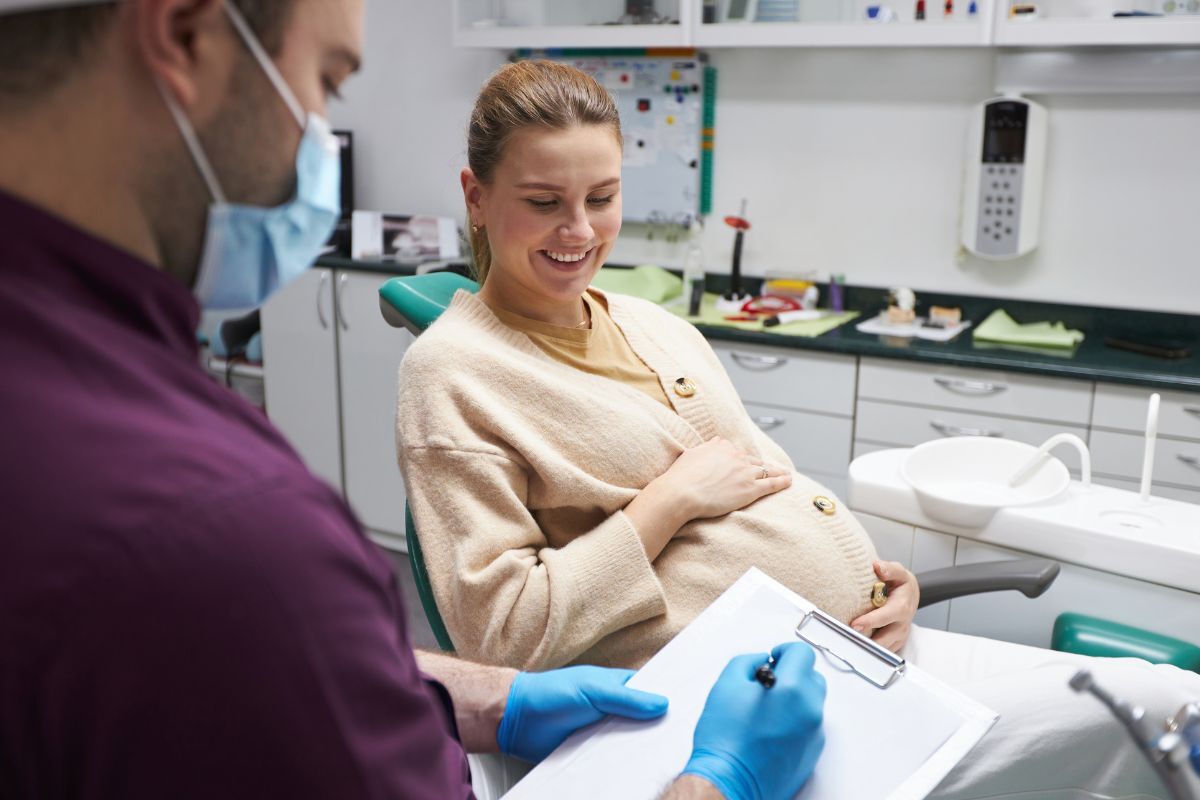
Yes, root canal treatment is entirely safe during pregnancy, and leaving an active dental infection untreated presents a far greater risk to both mother and baby than the procedure itself. Professional endodontic interventions are routinely performed using pregnancy-safe local anesthetics and protective shielding during diagnostic imaging.
At Ironwood Dental Care – Cooley Station, our proficient team, including Dr. Brent Stanley, Dr. Dominic Tam, and Dr. Jade Gottschalk, provides gentle, pregnancy-safe dental care tailored to your unique anatomical needs. If you’re suffering from intense tooth pain, schedule an appointment with our caring team today to see if our root canal therapy in Gilbert is the right solution for you.
The Clinical Truth: Safety of Root Canals During Pregnancy
According to data published by the Centers for Disease Control and Prevention (CDC), approximately 60% to 70% of pregnant women experience periodontitis or oral health challenges due to systemic hormonal surges. Elevated progesterone and estrogen levels increase blood flow to oral tissues, intensifying inflammatory responses to dental plaque and rendering teeth more vulnerable to rapid decay.
If tooth decay penetrates the outer enamel and dentin layers to reach the inner pulp, an infection develops. Allowing a pulp infection to persist carries a real danger: untreated oral bacteria can enter the bloodstream and trigger systemic inflammatory pathways. Clinical research consistently correlates untreated maternal oral infections with heightened risks of adverse pregnancy outcomes, including low birth weight and preterm labor. Endodontic therapy resolves this biological threat by eliminating harmful bacteria at the root cause.
Trimester-by-Trimester Protocol: Timing Your Care
While an acute dental emergency requires immediate intervention regardless of gestational age, elective steps or non-urgent phases of treatment are scheduled strategically across trimesters.
|
Trimester |
Clinical Approach |
Safety Rationale |
| First Trimester (Weeks 1–12) | Emergency pain relief & infection control | Organogenesis occurs during this window. Emergency care is provided safely, while routine elective care is deferred. |
| Second Trimester (Weeks 13–27) | Ideal window for root canal treatment | Fetal organ development is complete, nausea has typically subsided, and lying in the dental chair is comfortable. |
| Third Trimester (Weeks 28–Term) | Essential interventions & pain management | Treatment remains safe, but positioning in the dental chair is adjusted to prevent supine hypotensive syndrome. |
Addressing Safety Concerns: Anesthetics, Imaging, and Medications
Diagnostic Dental Radiographs (X-rays)
Modern digital radiographs emit extremely low levels of radiation. According to the American College of Obstetricians and Gynecologists (ACOG), diagnostic dental X-rays with proper abdominal and thyroid lead shielding are safe at any stage of pregnancy. The exposure to the pelvic region from a shielded dental X-ray is virtually unmeasurable.
Local Anesthetics
Local numbing agents such as lidocaine (Category B) cross the placenta in negligible amounts when administered in standard clinical doses. Epinephrine is added in minute quantities to keep the anesthetic localized, keeping you pain-free without affecting fetal heart rate.
Pregnancy-Safe Medications
Post-treatment discomfort is managed with pregnancy-safe analgesics like acetaminophen. If antibiotics are required to control systemic bacterial spread, penicillin or amoxicillin are prescribed under strict guidelines coordinated with your obstetrician.
What Happens During Root Canal Therapy?
This endodontic treatment removes infected pulp tissue from within the root canals of a tooth to eliminate pain and preserve your natural tooth structure.
During the procedure, your dentist gently accesses the interior of the tooth, meticulously cleans and disinfects the microscopic canals, and seals them with a biocompatible material called gutta-percha. To complete the restoration, a permanent crown is placed to restore full biting function.
Why Early Intervention Matters for Expecting Moms
Delaying the treatment allows bacteria to multiply, turning a localized infection into a severe abscess that can disrupt maternal nutrition, sleep, and overall wellness.
If you notice lingering sensitivity to hot or cold temperatures, severe pain when chewing, localized gum swelling, or tooth discoloration, schedule a diagnostic checkup immediately. Seeking early treatment for root canal therapy in Gilbert protects both your oral health and your developing baby.
Frequently Asked Questions (FAQs)
1. Can dental X-rays during a root canal harm my unborn baby?
No, dental X-rays do not harm your baby when proper lead apron shielding is used. Modern digital radiographs produce minimal, localized radiation that is completely safe throughout pregnancy.
2. Is local anesthesia safe for my baby during a root canal?
Yes, local anesthetics like lidocaine are safe during pregnancy when administered in regulated amounts. They keep you pain-free without posing harm to fetal development.
3. What happens if I delay a root canal until after delivery?
Delaying a root canal can cause the infection to spread into neighboring tissues or the bloodstream. Persistent infection causes severe systemic stress and increases the risk of pregnancy complications.
4. Which trimester is best to get a root canal done?
The second trimester is the optimal time for dental procedures because organ development is complete and chair comfort is high. Emergency pain relief, however, should be performed immediately in any trimester.
5. Can severe tooth pain trigger premature contractions?
Yes, intense physical pain and untreated infection trigger stress hormones like cortisol and inflammatory prostaglandins. These systemic chemical responses can potentially induce early uterine contractions.
6. Are antibiotics prescribed after a root canal safe during pregnancy?
Yes, pregnancy-safe antibiotics like penicillin and amoxicillin are commonly prescribed when indicated. Your dentist selects medications that eliminate bacterial risk while remaining safe for your baby.
7. Will a root canal affect my ability to nurse after delivery?
No, root canal treatment does not negatively impact future lactation or breast milk quality. Local anesthetics and pregnancy-safe medications clear your system rapidly without affecting nursing.
Prioritize Your Health and Comfort: Schedule Your Evaluation
Navigating pregnancy requires taking care of your overall health, and your oral well-being is a vital part of that journey. Leaving an infected or deeply decayed tooth untreated poses far greater risks to both you and your developing baby than receiving gentle, pregnancy-safe endodontic care. With modern techniques, pregnancy-safe local numbing agents, and precise digital imaging protected by lead shielding, treating dental pain early ensures a healthy, stress-free pregnancy.
At Ironwood Dental Care – Cooley Station, our goal is to provide expecting mothers across Gilbert with compassionate, personalized care in a relaxing environment. If you are experiencing persistent tooth sensitivity, throbbing pain, or localized gum swelling, do not wait for symptoms to worsen.
When you visit our dental office, our dedicated clinical team will perform a comprehensive diagnostic examination to assess your unique anatomical needs and customize a treatment plan that keeps you and your baby safe. Book an appointment today to take the first step toward lasting relief.
